





.png?imageMogr2/format/webp)
A practical look at how TPU-based elastic non-wovens are changing the way textile manufacturers design for comfort, durability, and production efficiency
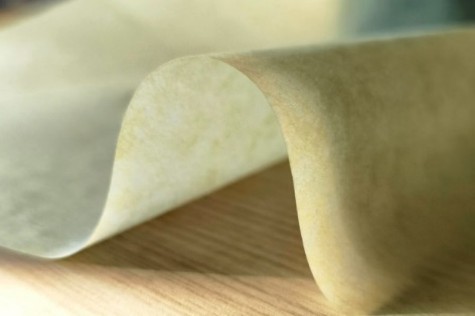
Textile manufacturing has a quiet problem: traditional elastic materials don't breathe well. Spandex-elastane blends are the workhorse of stretch garments, but they trap moisture, lose recovery after repeated washing, and create production bottlenecks because they need to be incorporated into woven or knitted structures. TPU elastic non-woven materials approach the same problem from a different direction — instead of weaving elasticity into fabric, they extrude it directly as a non-woven web. The result is a material that stretches, recovers, breathes, and bonds in ways that traditional textile processes can't easily replicate.
Here's what makes TPU non-wovens functionally different from conventional stretch textiles, where they're being deployed in production right now, and what textile manufacturers should understand before switching a line over to this material.
What TPU Elastic Non-woven Actually Is
The name tells you the three things that matter. TPU — thermoplastic polyurethane — is the base polymer. It's known for high elongation (300–700%), excellent abrasion resistance, and a soft, rubbery hand feel. Elastic means the material stretches and returns — in practice, TPU non-wovens typically deliver 200–400% elongation with better than 90% recovery. Non-woven means the fibers are bonded directly into a fabric web without spinning, weaving, or knitting — most commonly through meltblown or spunbond processes.
The manufacturing process itself is what unlocks the functional differences. Meltblown TPU non-wovens produce microfibers in the 0.5–10 micron range — that's finer than most textile yarns — which creates a very high surface-area-to-weight ratio. This directly affects three properties textile manufacturers care about: breathability (air and moisture vapor can pass through the micro-voids between fibers), surface conformability (microfibers follow irregular contours better than woven yarns), and bonding behavior (high surface area means strong thermal or ultrasonic bonds with less adhesive).
What TPU non-woven is NOT: It's not a coating applied to fabric. It's not a laminate where a TPU film is glued to a textile substrate. Those approaches add a separate process step and a bond interface that can fail. A direct-extruded TPU non-woven is one material throughout — the stretch, the breathability, and the surface properties all come from the same fiber structure.
The Five Functional Properties That Matter in Production
When a textile manufacturer evaluates whether TPU elastic non-woven can replace or augment an existing material in their process, they're looking at a handful of specific properties. Here's how TPU non-woven performs on each:
| Property | Typical TPU Non-woven Value | Textile Production Implication |
|---|---|---|
| Elongation at break | 200–400% (MD), 150–300% (CD) | Sufficient for garment stretch panels, elastic waistbands, and compression applications. Can be tuned by adjusting meltblown process parameters. |
| Elastic recovery | 90–98% after 50% extension | Outperforms standard spandex blends after 30+ wash cycles. Critical for medical compression garments where recovery consistency matters. |
| Air permeability | 50–300 cm³/cm²/s (at 25–50 gsm) | Breathable at low basis weights — suitable for medical dressings, hygiene products, and cosmetic sheet mask substrates. Can be decreased by calendering or increased by reducing fiber diameter. |
| Moisture vapor transmission | 800–3,000 g/m²/24h | Moisture-passing without being hydrophilic — skin stays drier than with cotton-elastane blends. Important for extended-wear products. |
| Thermal bondability | Bonds at 130–160°C | Can be ultrasonically or thermally welded directly to polyester, nylon, and other TPU surfaces. Eliminates stitching in many assembly steps — reduces production time and seam bulk. |
The recovery numbers deserve special attention. Most spandex-blend fabrics lose 15–30% of their recovery force after 30 industrial wash cycles at 60°C. TPU non-wovens, because the elasticity comes from the polymer itself rather than a mechanically crimped fiber, maintain recovery above 90% through comparable wash testing. For reusable medical garments, wound care compression products, and hygiene items that go through sterilization cycles, that difference translates directly to product lifespan.
Production Advantages Over Traditional Woven Elastic Textiles
The functional properties drive the performance story. The production advantages drive the business case. Here's where TPU non-wovens change the math for textile manufacturers:
- Skip the spinning and weaving steps. Traditional stretch textiles go through fiber spinning → yarn twisting → weaving/knitting → heat setting → dyeing/finishing. A TPU non-woven goes from polymer pellets to finished fabric in a single meltblown or spunbond line. You're cutting 4–6 process steps out of the value chain. For manufacturers producing millions of square meters, the capital and labor savings on those intermediate steps are substantial.
- No seam bulk — ultrasonic welding replaces stitching. Because TPU bonds to itself and to polyester/nylon under heat and pressure, manufacturers can replace stitched seams with ultrasonic welds. The result: flatter seams (important for next-to-skin wear and medical applications), no needle holes (which can be bacterial entry points in wound care), and faster assembly.
- Basis weight flexibility without retooling. Meltblown TPU non-wovens can be produced from 15 gsm to 200 gsm by adjusting throughput and collector speed — on the same production line. A woven fabric typically needs a different yarn count, weave structure, and machine setup for each weight. For manufacturers running multiple product variants, this flexibility reduces changeover time.
- Lamination-ready without adhesives. TPU non-woven bonds directly to polyester knit, nylon fabric, or another TPU layer under heat and pressure. No separate adhesive film, no curing time, no solvent emissions. For multi-layer textile constructions — like a breathable outer layer laminated to an elastic inner layer — this simplifies the lamination line considerably.
Typical meltblown TPU non-woven production parameters
Extrusion temperature
190–230°C
Fiber diameter range
0.5–10 μm
Basis weight range
15–200 gsm
Web bonding method
Thermal / ultrasonic
Shore hardness (TPU input)
70A–95A
Where TPU Elastic Non-wovens Are Being Used in Textile Manufacturing
The adoption pattern follows the functional properties — TPU non-wovens show up where stretch, breathability, and bondability all matter at once. Here are the application areas where they're genuinely replacing traditional materials:
Medical Textiles & Wound Care
Medical-grade elastic base fabrics like Cornell's KNE-AP/FM series use TPU-based non-wovens as the conformable layer in wound dressings, surgical drapes, and compression bandages. The material stretches with body movement, breathes well enough to prevent maceration, and bonds ultrasonically — no stitching that could irritate healing skin. For manufacturers, the key advantage is process simplification: one non-woven layer replaces what used to require a knit elastic fabric plus a separate adhesive film.
.png?imageMogr2/format/webp)
Hygiene & Personal Care
Diaper elastic ear tabs, adult incontinence product stretch panels, and feminine hygiene product wings are high-volume applications where the combination of elastic recovery and ultrasonic bondability directly improves production line speed. TPU non-wovens in the 25–50 gsm range deliver sufficient elastic force for secure fit while bonding to polyethylene and polypropylene backsheet layers in under a second on high-speed converting lines. KNE-AP70 is an example of a grade designed for this balance of stretch, breathability, and fast thermal bonding.

Cosmetic & Facial Sheet Masks
This is a high-growth application. Facial sheet masks need a substrate that conforms perfectly to facial contours, holds serum without dripping, and feels soft against skin. TPU-based elastic non-wovens like the KNE-FM12 grade deliver better conformability than cotton non-wovens and better serum retention than standard spunlace. The material stretches to hug nose contours and jawlines — cotton masks tend to lift at these points — and breathes well enough that the user doesn't feel suffocated during the 15–20 minute application.

TPU Non-woven vs Traditional Stretch Textiles: A Comparison
To give the performance differences some practical context, here's how TPU elastic non-woven stacks up against the two materials it most commonly replaces in textile manufacturing:
| Comparison Criteria | TPU Elastic Non-woven | Spandex-Cotton Knit | TPU Film Laminate |
|---|---|---|---|
| Elastic recovery (50% ext, 30 washes) | 90–95% ✓ | 70–85% | 95–98% ✓ |
| Breathability (MVTR) | 800–3,000 g/m²/24h ✓ | 1,000–4,000 ✓ | 0–300 (unless perforated) |
| Seam construction | Ultrasonic weld — flat, no holes ✓ | Stitched — bulky, needle holes | Adhesive bond — potential delamination |
| Production process steps | 1 (meltblown) ✓ | 4–6 (spin, twist, knit, set, dye) | 2–3 (film extrusion + lamination) |
| Surface conformability | Excellent — microfibers follow contours ✓ | Good — depends on knit structure | Poor — film resists 3D shaping |
| Hand feel | Soft, rubbery — can be adjusted | Soft, fabric-like ✓ | Plasticky, slick |
| Sterilization compatibility | EtO, gamma, autoclave (limited) ✓ | EtO, autoclave | Gamma may embrittle film |
| Cost position | Medium — higher than basic spunbond | Low–medium ✓ (mature supply chain) | Medium–high (film + lamination premium) |
What the table doesn't capture: TPU non-woven is the only option in this comparison that delivers a stretch material with genuine breathability AND the ability to be ultrasonically welded. Knit textiles need stitching. Films need perforation (which costs money) to breathe. The non-woven structure solves both problems in a single process step — and that's the combination driving adoption in higher-value textile applications.
Cornell's KNE Series: TPU-based Elastic Non-woven Grades for Textile Applications
The Cornell brand under Chambroad supplies several grades of TPU-based elastic non-woven materials targeted at specific textile manufacturing segments. Here's a summary of the key grades and where they fit:
| Grade | Key Attribute | Target Textile Application |
|---|---|---|
| KNE-AP/FM Series | Medical-grade, breathable-conformable | Wound dressings, surgical drapes, medical compression textiles |
| KNE-FM12 | Conformable, breathable-fit | Facial sheet masks, cosmetic substrates |
| KNE-AP70 | Airy-stretchy, general-purpose elastic | Hygiene products, elastic tabs, general stretch-to-fit applications |
Don't overlook the fact that all four grades share the same TPU non-woven platform but are tuned differently — basis weight, fiber diameter distribution, and surface treatment — to match specific application requirements. That kind of tunability is inherent to the meltblown process and is one of the reasons a single material platform can serve medical, cosmetic, and hygiene markets from the same production asset.
Practical Considerations for Textile Manufacturers
Switching a production line to use TPU elastic non-woven isn't as simple as dropping in a new roll of fabric. A few things worth planning for:
- Ultrasonic welding equipment is a different capital investment. If your current line is stitch-only, adding ultrasonic welding stations requires capital, training, and process validation. The payback comes from faster assembly speeds and reduced seam defects, but it's not a zero-cost switch.
- TPU non-woven has directional stretch. Like most non-wovens, TPU meltblown fabric has higher elongation in the machine direction (MD) than the cross direction (CD). Orient the roll correctly for the stretch axis your product needs, or specify a grade with balanced MD/CD properties if multi-directional stretch is critical.
- Temperature sensitivity in downstream processes. TPU softens above 130°C. If your product goes through a curing oven, heat-transfer printing, or a sterilization cycle above that temperature, verify compatibility with the specific grade. Some grades handle short excursions to 140°C; sustained exposure at that temperature will cause web shrinkage.
- Moisture isn't a problem for the material — but it can be for the line. TPU is hydrophobic. It won't absorb water from humid air. But the high surface area of meltblown microfibers means that condensation (from cold storage to warm production floor) can wet the web surface. Allow material to acclimate before running if it's been stored below dew point.
- Test wash durability on your actual process, not the supplier's lab conditions. Recovery numbers from a lab launder-ometer at 40°C with mild detergent don't predict what happens in an industrial tunnel washer at 75°C with alkaline detergent. Request wash-cycle test data at your process conditions, or run your own trials.
FAQ: TPU Elastic Non-woven in Textile Production
Where TPU Non-woven Fits in the Bigger Textile Picture
TPU elastic non-woven is not going to replace woven stretch fabrics in fashion apparel — the drape, hand feel, and design language of woven textiles are in a different category. What it IS doing is taking over specific functional roles where stretch + breathability + bondability are the performance priorities and the production simplicity of a non-woven process creates real economic value.
Look at the trajectory. Medical textiles moved first because they valued the combination of conformability, breathability, and seamless construction. Hygiene and personal care followed — driven by high-volume converting line speeds and the elimination of adhesive steps. Cosmetic sheet masks are a rapidly growing segment where the material's conformability and serum retention outperform traditional cotton and spunlace substrates. That's three distinct market segments moving in the same direction, driven by the same underlying material properties. The trend has momentum.
Looking for TPU Elastic Non-woven for Your Textile Manufacturing Line?
Cornell (a Chambroad brand) supplies TPU-based elastic non-woven materials across the KNE series — from medical-grade conformable fabrics to high-breathability cosmetic mask substrates and hygiene-grade elastic materials. Our technical team can provide grade-specific data sheets, wash-cycle test reports, and production trial support.
Request Technical Specs Explore Non-woven Products